Our Story
began with a simple craving for home. What started as a small Filipino market in Colorado grew into a place where culture, family, and tradition come together—serving our community with the flavors we love.
Background and Marriage
Lanie (formerly Melanie Dizon Borbon of Mabalacat, Pampanga, Philippines) and Carl Piazza of Pueblo, Colorado first met in 1983 in the Philippines while Carl was serving in the United States Marine Corps. Both raised in the Catholic faith, they shared core values rooted in family, respect, humility, and commitment.
During their time together in the Philippines, Carl was chaperoned by Lanie’s two brothers, Hermel or Hector, honoring Filipino family traditions and the values with which Lanie was raised. This period of courtship reflected the importance her family placed on faith, respect, and family involvement.
Lanie and Carl were married on February 11, 1984, in Pueblo, Colorado. Their marriage blended Filipino and Italian/Spanish traditions and was firmly grounded in their shared Catholic faith, emphasizing lifelong commitment, perseverance, and devotion to family.
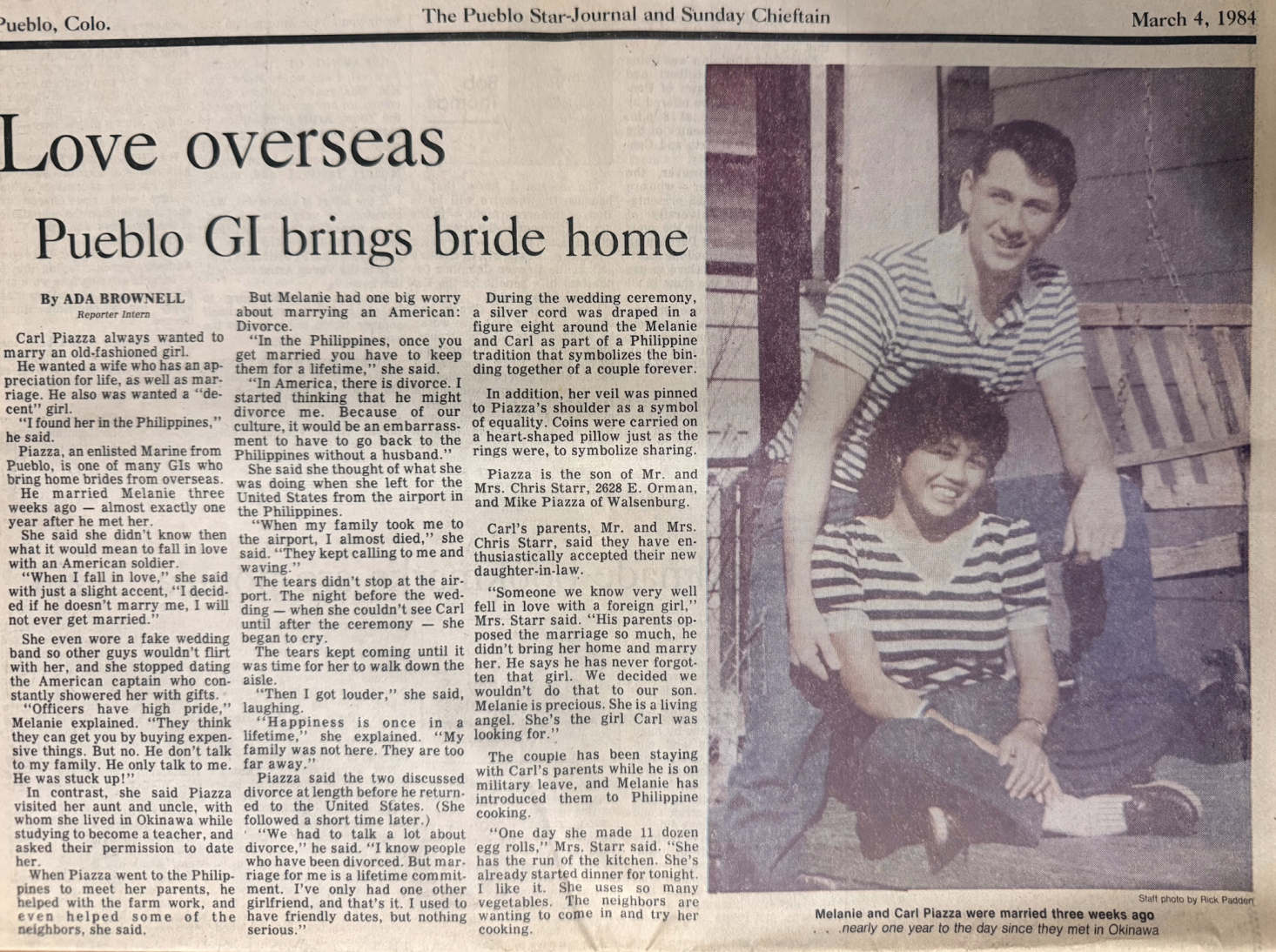
After their marriage, the couple moved to Yuma, Arizona, and later returned to Colorado in 1985 following Carl’s honorable discharge from the U.S. Marines. Over the next several years, Lanie and Carl worked diligently to build their future together. Both worked two to three jobs each while balancing full‑time work and higher education, continually supporting one another through college and various forms of employment to put themselves through school.
Through perseverance, faith, and teamwork, Carl went on to establish his career as an accountant, while Lanie became an inventory control coordinator. These formative years guided by strong family values, Catholic faith, and mutual support laid the foundation for the entrepreneurial journey that would later become Lanie’s Philippine Market and Kitchenette.
From Partnership to Purpose
How a Shared Journey Gave Rise to Colorado’s First Filipino Market
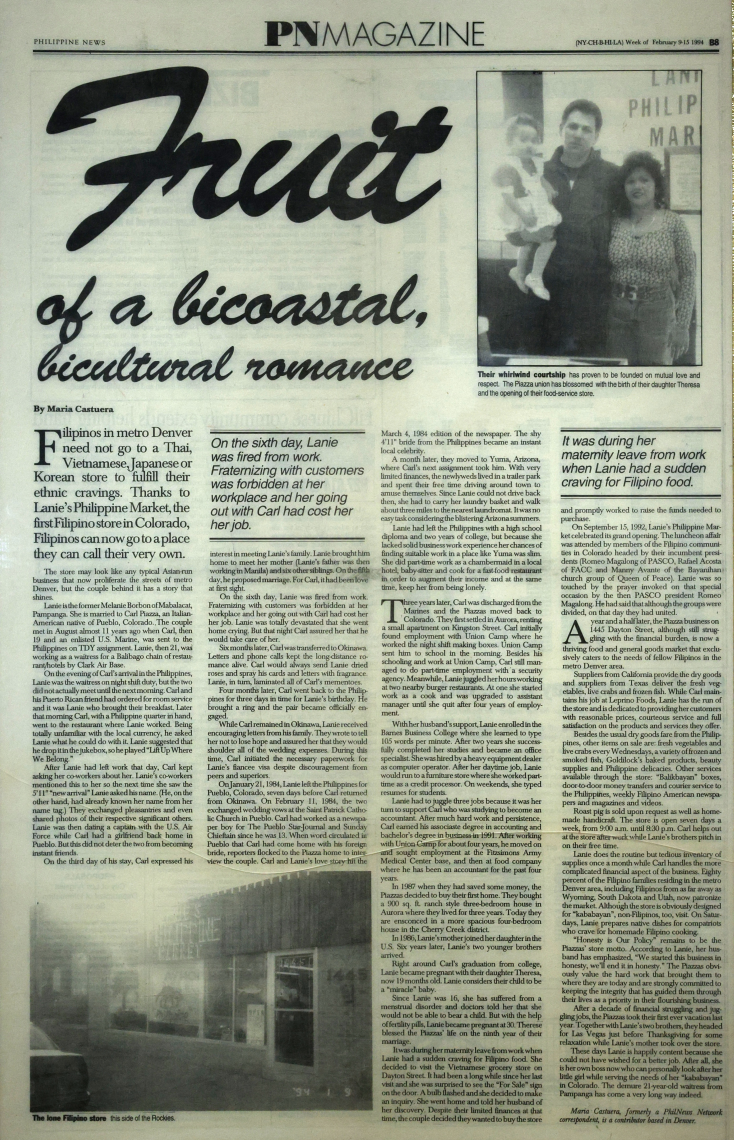
PN Magazine highlights the remarkable evolution of a personal partnership that grew into a lasting cultural landmark. Fruit of a Bi‑coastal, Bicultural Romance chronicles the journey of Lanie and Carl Piazza two individuals from different worlds brought together by chance, resilience, and shared determination. Their story spans oceans and pivotal life transitions, including military service abroad, immigration, financial sacrifice, family growth, and entrepreneurship. Each chapter laid the foundation for something far greater than they first imagined.
At a time when Filipino families in Colorado relied on distant cities to find familiar ingredients and flavors, Lanie recognized a meaningful gap in the community. What began as a deeply personal longing for the food of home soon became a vision rooted in service. With limited resources but unwavering commitment, Lanie and Carl transformed hardship into opportunity by opening Lanie’s Philippine Market in 1992 the first Filipino grocery store of its kind in Colorado.
Building the market was truly a family effort. With the help of Lanie’s brothers, Helton and Harry, the business took shape not only through vision, but through hard work. On weekends, Helton and Harry regularly came in to help stock shelves and prepare the store quiet but essential contributions that helped keep the market running during its formative days.
The grand opening on September 15, 1992, marked a historic milestone. The ribbon‑cutting ceremony was attended by leaders from across the Filipino community, including Romeo Magalong, President of PASCO; Manny Avante, then President of Bayanihan; and President of FACC, Mr. Rafael Acosta and his wife Mrs. Acosta. Their presence symbolized unity, collaboration, and shared pride across organizations on that memorable day.
Behind the scenes, small‑business support in Aurora during the early 1990s operated without a formal Small Business Development Center. Guidance instead came through the city’s economic development efforts and from dedicated individuals both men and women who worked directly with entrepreneurs. Leaders such as Jeff Barratt, along with city staff who provided hands‑on, on‑site assistance, played important roles in helping emerging businesses navigate approvals during that era.
More than a grocery store, the market quickly became a gathering place and cultural anchor. In the back of the store, Lanie opened a small Kitchenette, where she prepared homemade Filipino dishes for customers seeking the comfort and flavors of home. With the help of Ising Munoz, the Kitchenette flourished, offering freshly cooked meals that deepened the market’s role as a center of community and connection.
In addition to groceries and freshly prepared hot food, the market offered essential community services that met everyday needs within the Filipino community. These services included money remittance to the Philippines, Filipino movie rentals, phone cards, TravelFast ticketing for travel to the Philippines, and Balikbayan box shipping.
The shipping service later evolved into a dedicated operation known as Pentagon Cargo of the Rockies, further extending the market’s reach and impact. Pentagon Cargo of the Rockies was established through a partnership with California‑based Pentagon Cargo, Inc., whose principals included Rex C. Santacruz and Danny Infante. This collaboration enabled Lanie’s Philippine Market to expand door‑to‑door Balikbayan box services while maintaining trusted, community‑based operations in Colorado.
Through these offerings, the market provided Filipino families with a sense of belonging, connection, and cultural identity in a place far from home. Through discipline, faith, risk‑taking, and mutual support, the Piazza partnership shifted from survival to purpose bridging cultures, preserving traditions, and building community.
More than a love story, this is an origin story of community where resilience, cultural pride, family support, and shared sacrifice transformed a simple idea into Colorado’s first Filipino market, and a lasting legacy rooted in service, belonging, and purpose.
Growth Rooted in Family, Community, and Cultural Exchange
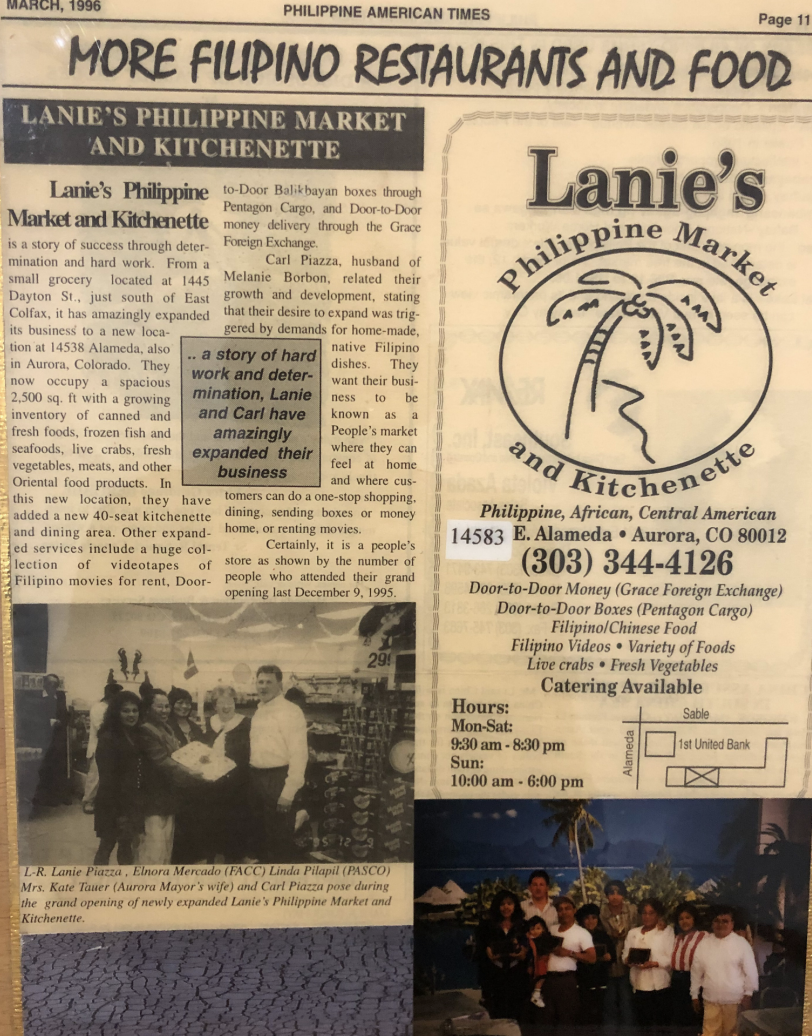
As Lanie’s Philippine Market and Kitchenette gained increasing recognition, the business entered a period of remarkable growth. What began as a modest grocery and kitchenette expanded into a 2,500‑square‑foot market and a 1,100‑square‑foot restaurant near Sable and Alameda by the Aurora Mall, reflecting rising community demand and years of perseverance.
While the market was founded to serve Filipino families, its reach quickly extended far beyond. Customers came not only from the Filipino community, but also from Africa, Hatia, Nigeria, and Samoa, as well as Central America and other communities. Many relied on the same core ingredients rice, meats, vegetables, and spices but prepared them according to their own cultural traditions. In this way, the market became a shared pantry of cultures and a true crossroads of global cuisine.
This era of growth was marked by a significant grand opening celebration, underscoring the market’s expanding role within Aurora’s diverse community. The event was attended by respected community and civic leaders, including the Head Leader of the African and Nigerian Community, Elnora Mercado, President of the Filipino American Community of Colorado (FACC), Linda Pilapil, President of PASCO, Manny Avante, President of Bayanihan and Mrs. Kate Tauer, wife of the Aurora Mayor. Their presence reflected the market’s importance not only as a business, but as a unifying community institution.
To support the expanding Kitchenette, Lanie traveled to California to recruit experienced culinary leadership. She hired Manong (Tony) Lucero as head chef of Lanie’s Philippine Kitchenette. Tony brought vision, expertise, and leadership to the kitchen, and he also recommended Ampi Capulong to oversee grocery operations, strengthening both sides of the business.
As customer demand continued to grow, the team expanded to include dedicated staff members Nita Pacheco, Cheri Perez, Remy Morgan, Paul Capulong, Pete, Sherri Infante and Ms. Puring. Each played an important role in supporting daily operations and meeting the needs of an ever‑growing customer base. Tony Lucero’s contributions extended beyond cooking; with the help of Jim Younger and Ernie Marucut, he also led the remodeling of both the market and the Kitchenette, ensuring the space could better serve a diverse and expanding community.
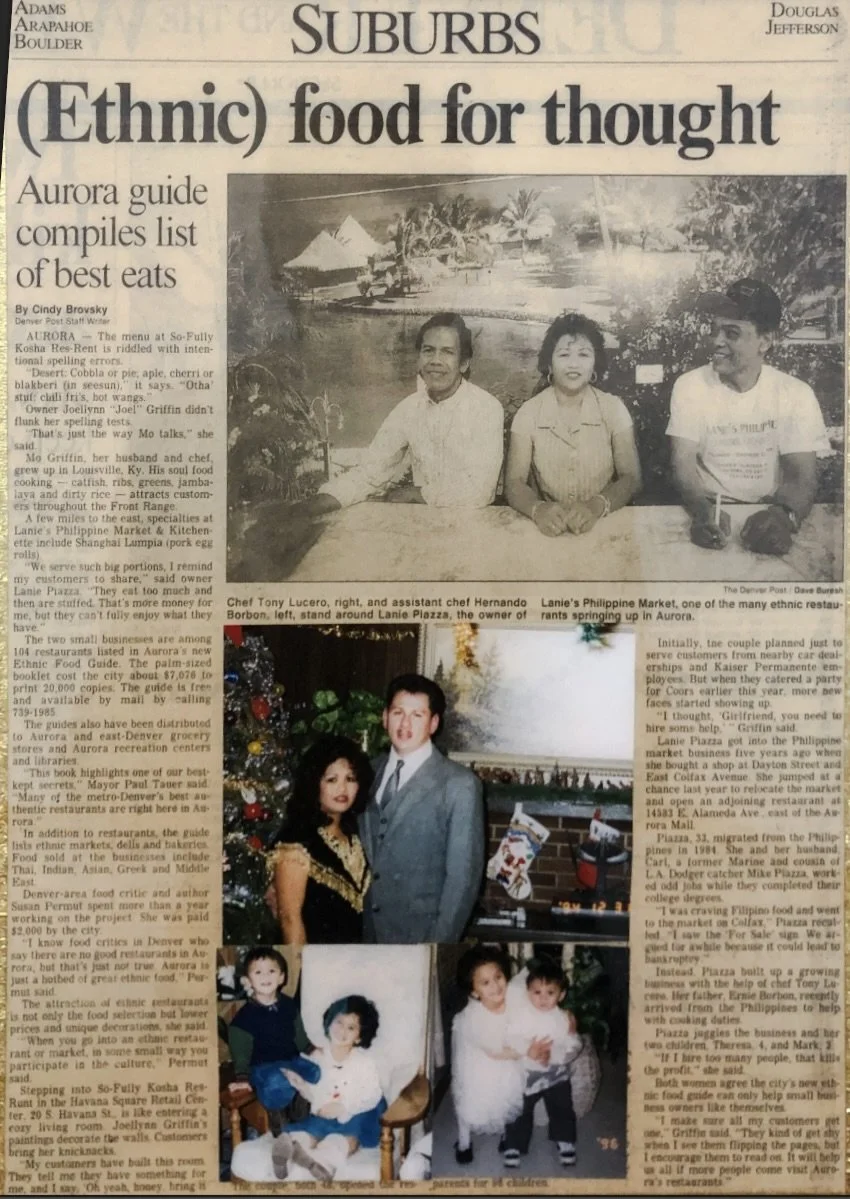
Family remained at the heart of this continued expansion. Lanie’s siblings, Jojo and Dol Borbon, joined in to help, contributing not only their time and labor, but also their remarkable singing talent, which brought warmth and joy to gatherings and celebrations. Their involvement reinforced the market’s role as a place of connection, not just commerce.
That family circle grew even stronger when Lanie’s father, Hernando (Erning) Borbon, immigrated to Colorado to help support his daughter during this pivotal chapter. His presence reflected the multigenerational commitment that sustained the business through its continued growth.
During this period, Lanie also gave birth to two children, Theresa and Mark, raising her family alongside the business. Mark quickly became a familiar and beloved presence, entertaining customers with his playful personality. Theresa, meanwhile, began learning the business at a young age donning a small apron and pretending to take orders already absorbing the rhythms of the market and Kitchenette that surrounded her.
As reflected in multiple newspaper features, this chapter marked a turning point when Lanie’s Philippine Market and Kitchenette matured into a recognized culinary and cultural destination. Growth was driven not only by entrepreneurship, but by family, teamwork, cultural exchange, and an unwavering commitment to serving a diverse community.
Lanie Philippine Market and Kitchenette stood as a testament to how determination and shared effort transformed a neighborhood market into a thriving, multicultural institution one where different cultures met, ingredients connected traditions, and community continued to grow.